
-
 How La Palma Homeowners Can Lower Summer Energy Bills
Learn how La Palma homeowners can reduce summer energy bills with practical strategies including thermostat optimization, regular AC…
❓ Frequently Asked Questions
When should I schedule spring HVAC maintenance in La Palma?
Schedule your spring HVAC maintenance in La Palma between March and early May, before temperatures consistently reach the 80s and 90s. This timing ensures your system is ready for summer's peak cooling demands and allows you to avoid the rush of service calls that occurs once heat waves arrive. Early spring appointments also give you time to address any issues discovered during the tune-up before you actually need air conditioning.
How does spring HVAC maintenance protect my home's resale value?
Spring HVAC maintenance protects your La Palma home's resale value by ensuring your system operates efficiently, extends equipment lifespan, and provides documentation that demonstrates responsible homeownership. Home inspectors specifically examine HVAC systems, and well-maintained equipment with service records reduces buyer concerns about immediate replacement needs. In La Palma's $900,000 median home value market, HVAC condition significantly influences buyer confidence and offer prices.
What makes spring HVAC preparation different in California compared to other states?
Spring HVAC preparation in California must address unique challenges like wildfire smoke filtration, intense summer heat waves, high pollen counts from diverse vegetation, and dramatic temperature swings between marine layer mornings and hot afternoons. California's extended cooling season (often March through October) means systems work harder for longer periods than in other regions, making preventive maintenance even more critical. Additionally, California's energy costs make efficiency optimization more financially impactful.
Can I perform spring HVAC maintenance myself or do I need a professional?
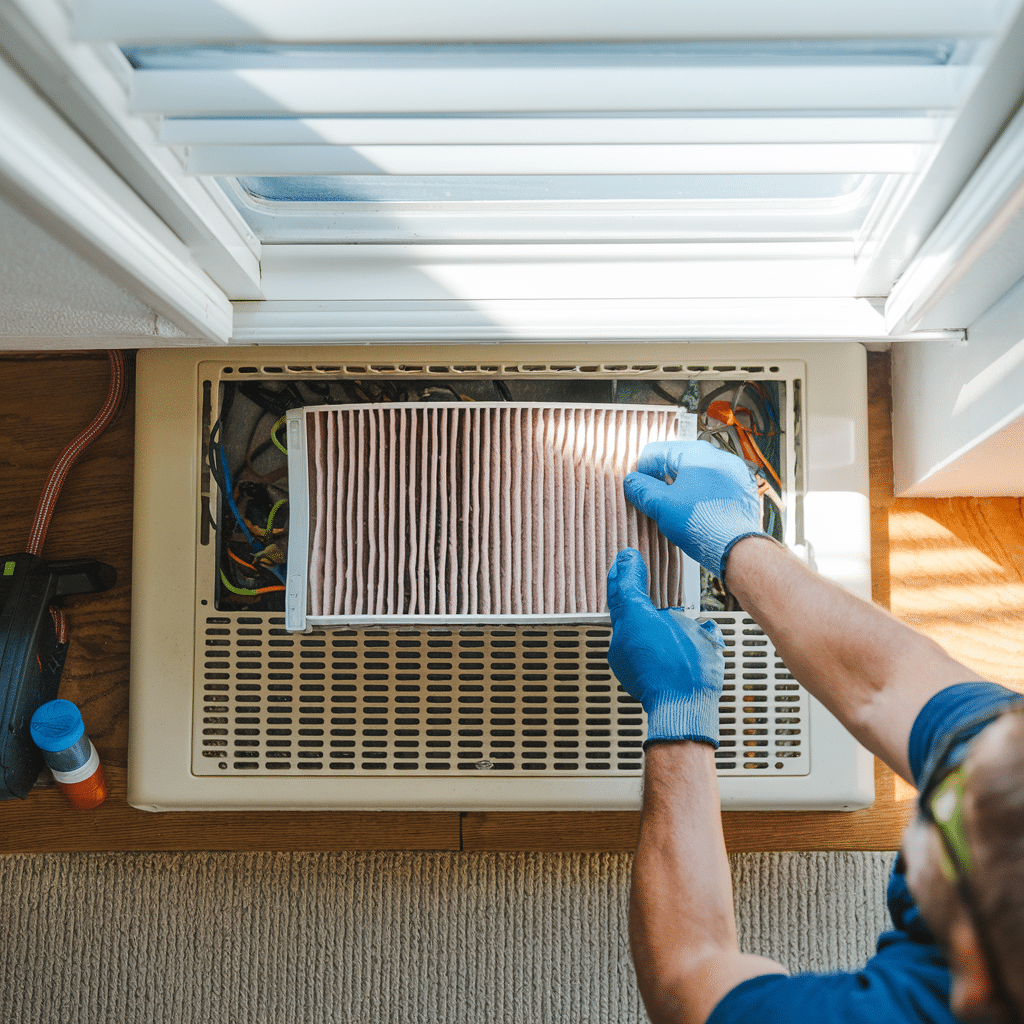
Homeowners can perform basic spring HVAC tasks like replacing filters, cleaning around outdoor units, and checking thermostat operation. However, professional service is essential for tasks requiring specialized tools and certification, including checking refrigerant levels, testing electrical components, measuring airflow and temperature differentials, and identifying early-stage component failures. The most effective approach combines regular homeowner maintenance with annual professional tune-ups, ensuring both immediate care and expert system evaluation.


